

Falls from height remain the single most common cause of workplace fatalities in Great Britain. HSE's latest RIDDOR data recorded 4,684 non-fatal falls from height in 2024/25, with ladders involved in around 40% of all workplace falls. Those are sobering numbers.
Here's the part that doesn't get enough airtime: a significant proportion of ladder incidents are linked to management failures rather than equipment failure. And one of the most overlooked management failures is poor ladder storage.
Most guides treat ladder storage as a space-saving problem. It's not. It's a compliance problem.
How you store a ladder determines whether damage is visible before the ladder goes back into use. A rung that's corroded from being left on a damp concrete floor, or a fibreglass stile that's become brittle from years of UV exposure in an unshaded lean-to, isn't going to announce itself during a two-second visual check.
This guide covers the right storage method for each ladder type, the environmental factors that shorten ladder life, and the legal thread that ties storage directly to your obligations under UK health and safety law.

What's the Best Way to Store a Ladder?
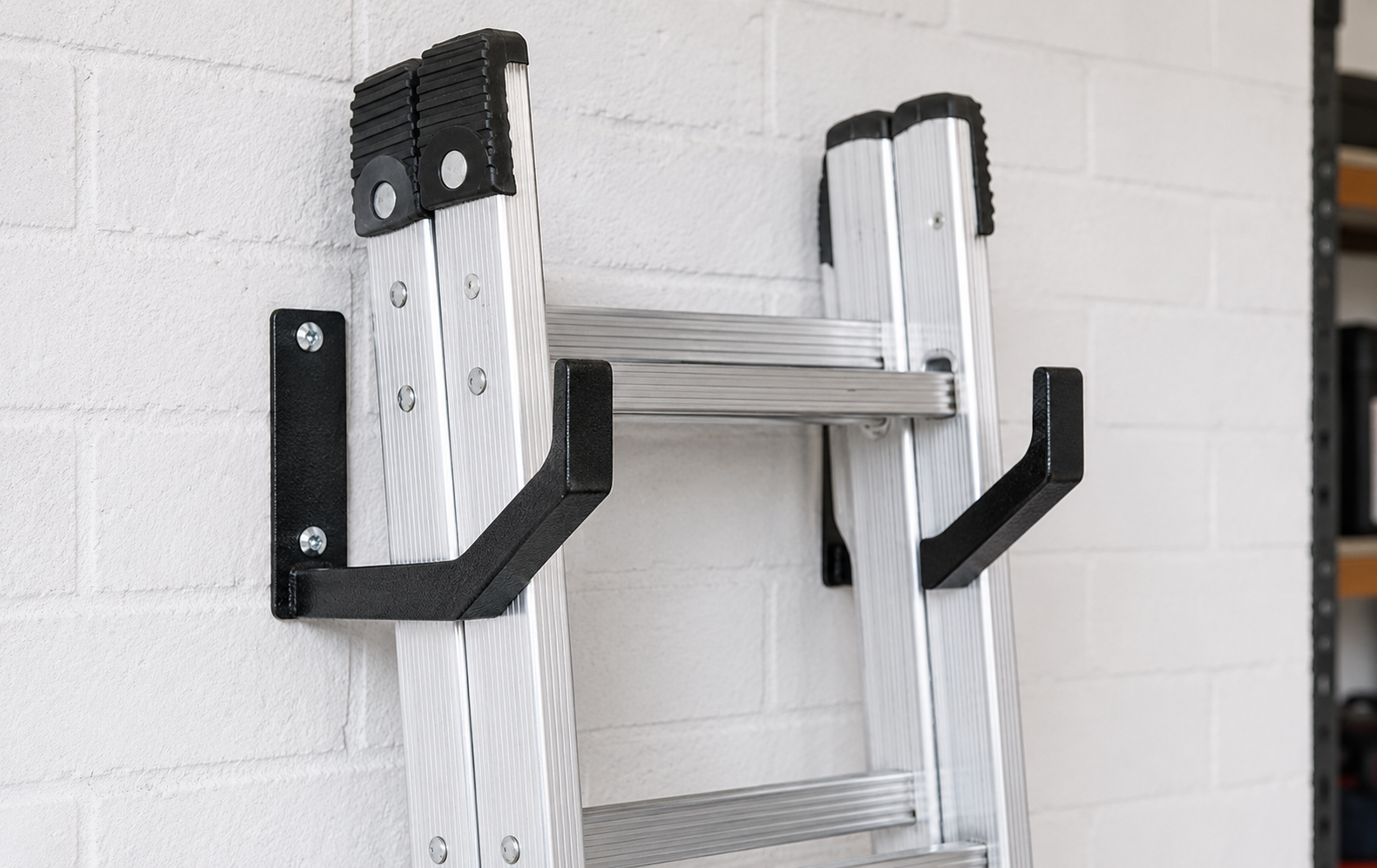
There are 3 main ways to store a ladder depending on the type of ladder and the space you're working with.
1. Wall-Mounted Hooks: Best for Step Ladders and Lighter Ladders
Heavy-duty wall hooks are the most practical solution for step ladders in domestic and light commercial settings. They get the ladder off the floor (removing the damp and trip hazard risks), keep it accessible, and take up minimal horizontal space.
For this to work properly, you need at least two support points positioned to distribute weight evenly. One near the top of the ladder and one near the bottom. If you're storing step ladders horizontally on wall hooks, make sure the hooks contact the stiles, not the rungs. Loading weight onto rungs in storage can cause micro-deformation over time, particularly on aluminium.
Height matters too. Store the ladder high enough to clear car doors if you're in a garage, but low enough that you can take it down safely without overreaching. If you need to use a second ladder to retrieve the first one, the storage position is too high.
2. Horizontal Wall Racks: Better for Long Extension Ladders
For extension ladders over 3 metres, a horizontal wall rack is a more stable option than hooks alone. The critical rule here comes from practical guidance on ladder storage: use a minimum of three support points for long ladders to prevent sagging along the length.
Sagging sounds minor. It isn't.
A ladder stored with only two support points over a long span can develop a permanent bow along the stiles, which affects how it sits on a surface and distributes load when in use. Support rails should contact the stiles, not the rungs, and they should be padded or lined if possible to prevent surface wear.
3. Ceiling Hoists and Overhead Storage: Good for Tight Garages
Ceiling-mounted hooks and hoist systems are increasingly popular for domestic garage storage because they lift the ladder completely out of foot traffic and clear the floor for cars or equipment. They work well for lighter step ladders and shorter extension ladders.
If you're going the ceiling hoist route, check the load rating of the mounting hardware against the weight of your specific ladder, not a generic estimate. Ceiling joists aren't uniform, and overloading a poorly anchored mount is a serious risk. Bungee cords or nylon straps to secure the ladder in position are worth adding; they prevent movement if someone brushes past and stop the ladder shifting during any vibration in the building.
How Should Ladders Be Stored in a Commercial or Warehouse Setting?
This is where most generic ladder storage guides fall short. A domestic step ladder and a commercial warehouse ladder are not the same piece of equipment, and they don't need the same storage approach.
Warehouse and Racking Ladders: Different Rules Apply
Racking ladders and warehouse step ladders are designed for high-frequency, daily use in pick-face environments. Over 30 years of supplying UK warehouses, the most common storage mistake we see is ladders left leaning flat against racking bays at the end of a shift. It seems harmless, but it creates several problems at once: it's a trip hazard for anyone moving through the aisle, it makes the pre-shift inspection harder to carry out properly, and a ladder stored flat on racking is at risk of being displaced by stock movement.
The better approach for commercial settings is dedicated vertical storage near the point of use, either lockable wall brackets or a designated storage bay that's clearly marked and separated from pedestrian and FLT routes.
If the ladder is being used across multiple bays or levels, consider how it's being transported as well as where it's being stored; a ladder dragged along a warehouse floor picks up damage that accumulates fast.
Platform Step Ladders and Mobile Safety Steps
The Workplace Depot's Easy Action Safety Steps are designed with a self-immobilising mechanism. You step on to lock them in place, step off to mobilise. This makes them safer to store upright than conventional mobile steps, where an unsecured ladder can roll or tip if knocked. The platform folds and locks flat for storage, keeping the footprint compact.
If you're storing platform step ladders, always fold and secure the platform before putting them away; storing them with an open platform increases the chances of something hooking on it and pulling the unit over.
Lockable Storage and Security
In commercial settings, ladder security matters as much as ladder safety. Ladders left accessible are targets for theft and unauthorised use, both of which create liability. Lockable wall brackets or a dedicated secure store with controlled access are the cleanest solutions.
If you're not already using a ladder safety tag kit, this is a straightforward way to keep inspection records attached to the ladder itself rather than stored separately. The tag travels with the ladder; anyone picking it up can see when it was last inspected, by whom, and whether any defects were noted. It's a simple addition that makes the PUWER inspection requirement visible and auditable.
Which Ladders Does The Workplace Depot Stock? A Quick Guide to the Range
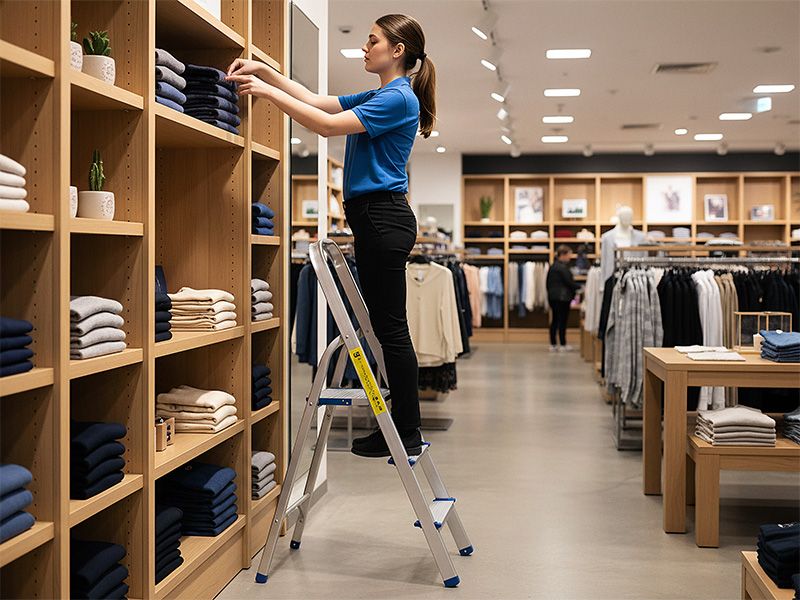
If you're reviewing your ladder setup, whether that's replacing an ageing ladder or choosing the right type for a new space, here's a snapshot of what we carry:
Step ladders: Domestic to commercial grades, available in aluminium and fibreglass
Warehouse step ladders: Built for daily warehouse use, with larger platforms and higher weight ratings
Racking ladders: Designed specifically for pick-face access in racking environments
Platform step ladders: Wide non-slip platforms for tasks that require a stable work surface
Mobile safety ladders: With castors and self-immobilising steps for multi-point use
Fibreglass step ladders: Electrically non-conductive, suited to electrical maintenance environments
All ladders are built to industry standards. Next-day delivery is available on most lines when you order before 3pm. Browse the full safety steps and ladders range to see what fits your space.
Why Ladder Storage Is a Safety Issue, Not Just a Space Issue
The PUWER Connection, What the Law Actually Requires
The Provision and Use of Work Equipment Regulations 1998 (PUWER) places a clear duty on employers and the self-employed to ensure work equipment is maintained in an efficient state, in efficient working order, and in good repair. Ladders used at work are work equipment. That means the obligation to inspect them isn't optional, and storage is where that obligation starts, not ends.
Here's the link that often gets missed: improper storage causes damage that pre-use checks won't always catch.
Corrosion at the base of aluminium stiles, hidden cracking in timber rungs from repeated damp-and-dry cycles, resin degradation in fibreglass from sustained UV exposure, none of these are visible on a quick visual check if the damage is in its early stages. By the time it shows, the ladder may already have been used dozens of times.
What the Work at Height Regulations 2005 Add
The Work at Height Regulations 2005 build on PUWER by requiring that equipment used at height is suitable, inspected, and maintained. The HSE's ladder inspection guidance is explicit: ladders should be stored away from extreme heat, moisture, and anything that could cause deformation. They should be kept clean and free from oil, grease, and mud. This is not just because it's good housekeeping, but because contamination on rungs is a slip hazard and contamination on stiles can mask structural damage.
In short: your storage setup is part of your compliance posture. If you couldn't point to how and where your ladders are stored as part of a health and safety inspection, that's a gap worth closing.
Does Material Type Affect How You Should Store Your Ladder?
Yes, and this is one of the most under appreciated parts of ladder care.
Aluminium Ladders: Watch for Damp and Floor Contact
Aluminium doesn't rust, but it corrodes and damp concrete is one of the primary culprits. The base of aluminium stiles sitting on a wet or consistently damp floor develops white oxidation and pitting over time. This is cosmetically ugly but, more importantly, it weakens the cross-section of the stile in the area that takes the most compressive load during use.
Store aluminium ladders off the floor and on hooks, rails, or a wooden pallet if nothing else is available. Even a few centimetres of clearance makes a meaningful difference over months of storage.
Fibreglass Ladders: Protect from UV and Heat
Fibreglass is the material of choice for electrical work because it's non-conductive, but it's vulnerable to UV degradation in a way that aluminium isn't. Sustained exposure to sunlight degrades the resin matrix in the fibreglass, making the stiles progressively more brittle. You won't see this happening, the surface may look fine while the structural integrity is declining.
Store fibreglass ladders indoors wherever possible, or use a UV-resistant cover if outdoor storage is unavoidable. Keep them away from direct heat sources. This includes boilers, hot pipes, or south-facing metal sheds that trap heat.
Excessive heat accelerates the same degradation as UV.
Timber Ladders: Dry Storage Is Non-Negotiable
You're less likely to encounter timber ladders in modern workplaces, but they do still appear in heritage buildings, specialist trades, and certain agricultural settings. Timber is the most demanding material to store correctly.
Damp causes swelling, rot, and hidden cracking along the grain. This damage that can be invisible until a rung gives way under load. Dry, ventilated storage is essential; a timber ladder left in a damp outbuilding for a winter should be thoroughly inspected by a competent person before going back into use.
Is It Safe to Store Ladders Flat on the Floor?
Not as a routine practice, no. However, it's not an absolute prohibition if done correctly.
Why Floor Storage Creates Problems
The main risks are trip hazards, point loading on rungs, and the damp-floor issue covered above. A ladder lying on a warehouse floor or a garage floor is a hazard for anyone moving through the space. It's also much harder to carry out a proper visual inspection of a ladder that's flat on the floor with its underside inaccessible.
In a commercial setting, floor storage also means the ladder is vulnerable to being run over by a forklift or pallet truck, or having stock placed on top of it, both of which can cause damage that's easy to miss.
When Horizontal Storage Is Acceptable
If horizontal storage is your only option, do it properly: use full-length support rails that contact the stiles, not the rungs, with a minimum of three support points for ladders over 3 metres. Never store a ladder under racking where falling stock could land on it. And keep it above floor level. Even a low shelf or rack keeps it clear of floor damp and foot traffic.
Frequently Asked Questions
What's the best way to store a ladder?
Wall-mounted hooks are the most practical option for step ladders: two support points minimum, contacting the stiles, at a height that's accessible without overreaching. For longer extension ladders, a horizontal wall rack with three support points is more stable. Ceiling hoists work well where floor and wall space is limited.
How should ladders be stored?
Ladders should be stored away from damp, extreme heat, and direct sunlight. They should be kept clean and free from oil, grease, and mud. Support should be distributed across the stiles, not the rungs, and long ladders should have at least three contact points to prevent sagging.
Can I store ladders outside?
Indoors is always preferable. Fibreglass ladders are particularly vulnerable to UV degradation outdoors, and all ladder types are at risk from damp and temperature cycling. If outdoor storage is unavoidable, use a UV-resistant, weatherproof cover and inspect the ladder more frequently.
Is it safe to store ladders flat on the floor?
It's not recommended as a routine practice. Floor storage creates trip hazards, makes inspection harder, and exposes the ladder to damp and forklift damage in commercial settings. If horizontal storage is necessary, use full-length support rails at three points and keep the ladder elevated off the floor.
How often should stored ladders be inspected?
Under PUWER, work equipment must be inspected at suitable intervals by a competent person and the results recorded. For ladders in regular use, a detailed inspection at least every six months is widely recommended, with pre-use checks carried out by the user every time the ladder is taken out of storage.
Do I need to keep records of ladder inspections?
Yes, for ladders used at work. Pre-use visual checks by the user don't need to be recorded, but detailed inspections by a competent person should be documented. A ladder safety tag attached to the ladder itself is one of the most practical ways to keep these records accessible and auditable.
Good Ladder Storage Starts with the Right Ladder
Ladder storage and ladder selection are more connected than they might seem. A ladder that's too long for your available wall space will end up stored badly. A mobile safety step stored in a space that's too narrow will be at constant risk of being knocked over. Getting the right ladder for your space is step one, and then you can design storage around it.
The Workplace Depot's range of safety steps and ladders covers everything from lightweight domestic step ladders to heavy-duty warehouse step ladders and specialist racking ladders built for pick-face environments. If you need to pair a new ladder with a proper inspection record system, our ladder safety tag kit keeps everything in one place. Order before 3pm for next-day delivery, or get in touch if you need help matching the right ladder to your environment.
Posted in Health and Safety