

Catering Trolleys for Food Service
Choose a catering trolley for the job
A catering trolley can support serving, clearing and back-of-house transport, but the right format depends on the load, route and kitchen environment. List what will be moved, add its total weight and check the journey between storage, preparation, service and washing areas before comparing products.
Use the selected product page as the specification source. Materials, layouts, capacities, sizes, castors and included components vary between models and work environments. Do not assume that every food service trolley has the same construction or is suitable for direct contact with uncovered food.
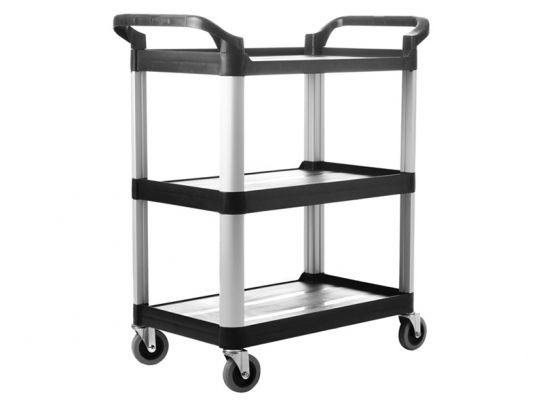
Start with the featured plastic Catering Trolley
The Catering Trolley is the featured product in this category. It has three polypropylene shelves and a specified maximum capacity of 125kg. Check the shelf dimensions and overall trolley footprint against the intended items and route.
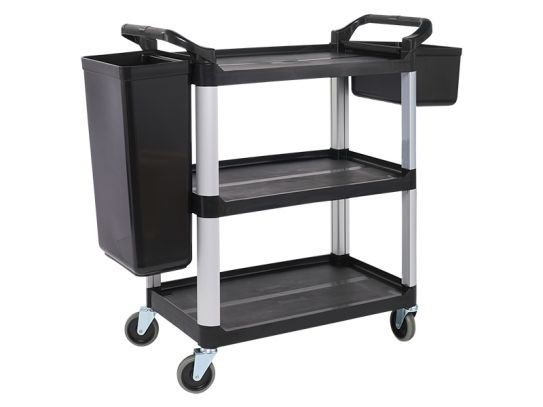
Catering trolley with removable bins
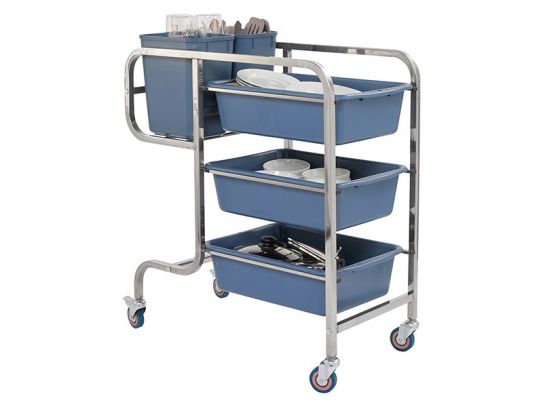
The Catering Trolley with Bins is an accessorised alternative with three polypropylene shelves, two removable containers and a specified maximum capacity of 125kg.
Check the position and dimensions of the included bins before ordering. Make sure the complete trolley will clear doors and serving areas. Do not assume the removable containers are suitable for liquids, waste or direct food contact unless the product instructions confirm this.
A folding plastic catering trolley
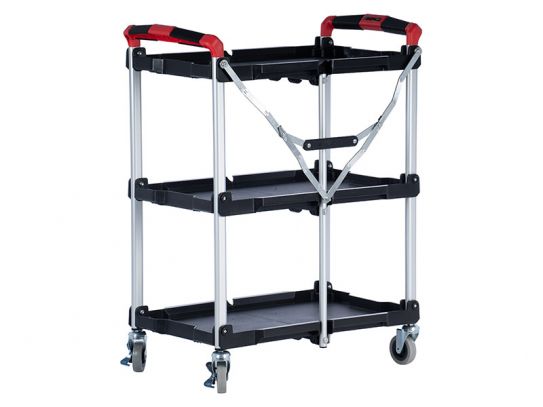
The Folding Catering Trolley is a three-tier model with a specified total capacity of 75kg. Check its folded and assembled dimensions, locking arrangement and product instructions where storage space is important.
Folding reduces the stored footprint only as described in the product instructions. It does not make the trolley suitable for lifting while loaded, carrying people, or use on steps, kerbs or routes outside those instructions.
Compare stainless steel catering trolleys
Stainless steel catering trolleys form a distinct lane within the range. Choose by the number and spacing of levels, the stated total capacity, the size of the complete trolley and the route it must follow. Material wording alone does not create a guarantee of hygiene, corrosion resistance or suitability for every cleaning chemical.
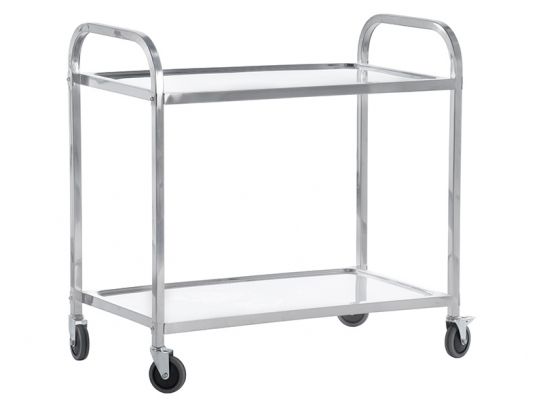
Two-shelf stainless steel trolley
The Stainless Steel Trolley has two raised-lip levels and a specified maximum capacity of 125kg. Compare the usable area and spacing with trays, crockery, containers or equipment, then check how the complete trolley will be loaded, turned and parked.
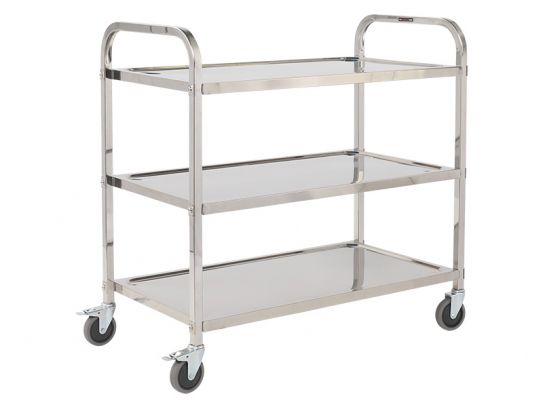
Three-tier stainless steel service trolley
The Stainless Steel Service Trolley provides three tiers and a specified maximum capacity of 225kg. Choose the three-tier layout when separate loading surfaces will help organise trays, crockery or containers, while keeping the combined load within the stated limit.
Five-shelf stainless steel trolley
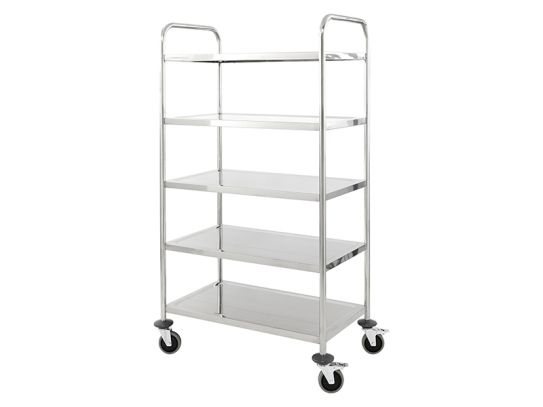
The Stainless Steel Shelf Trolley provides five levels and a specified maximum capacity of 225kg. Choose the five-level layout when smaller compatible items benefit from separate loading surfaces, while checking the usable spacing and keeping the combined load within the stated limit.
A wire mesh trolley option
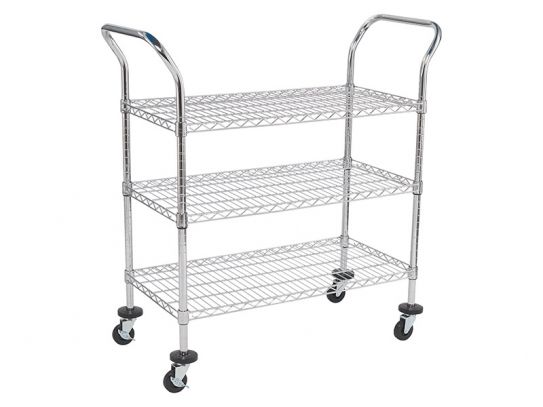
The Chrome Wire Mesh Trolley has three adjustable mesh shelves and a specified maximum capacity of 120kg. Adjust the levels to suit compatible items of different heights, but check the mesh aperture and securely contain smaller or loose objects.
Match levels, bins and capacity to the load
Begin with the heaviest normal load, including trays, containers and any removable accessories. Stay within the stated maximum for the exact SKU and avoid concentrating weight on one level unless the instructions explicitly permit it. A total trolley capacity is not automatically a per-level rating.
Check that every item sits securely within the usable surface. Keep tall or unstable loads away from the edges, do not obstruct the handle or route, and use suitable closed containers for anything that could spill, leak or contaminate another item.
Measure the complete catering route
Measure doors, corridors, serving points, lifts, storage areas and turning spaces before ordering. Include handles, castors, bins and projecting parts when comparing overall sizes with the narrowest point on the route and the available work area.
Inspect the route for thresholds, slopes, floor damage, obstructions and busy crossing points. Stated capacity does not establish that a loaded trolley can be controlled on every surface or gradient. Follow the product instructions and the site's own handling assessment.
Loading, moving and parking checks
Load on a stable, level surface where practical and keep the weight balanced. Make sure the route is clear before moving, maintain visibility and stop if an item shifts. Do not carry people, stand on shelves or use the trolley as access equipment.
When the trolley is parked, follow the exact model's castor and brake instructions. A product image or general category description cannot confirm braking performance, non-marking wheels, low-noise operation or suitability for a particular floor.
Cleaning and routine inspection
Check shelves, bins, handles, joints, castors and visible fixings before use. Remove the trolley from service if a component is damaged, loose or missing, and follow the supplied maintenance and replacement guidance.
Use cleaning products and methods compatible with the exact materials and instructions. Do not infer food-grade certification, sterilisation performance or resistance to every chemical from the words plastic, stainless steel or chrome.
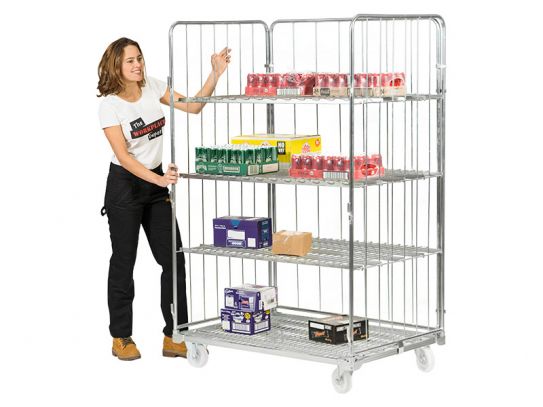
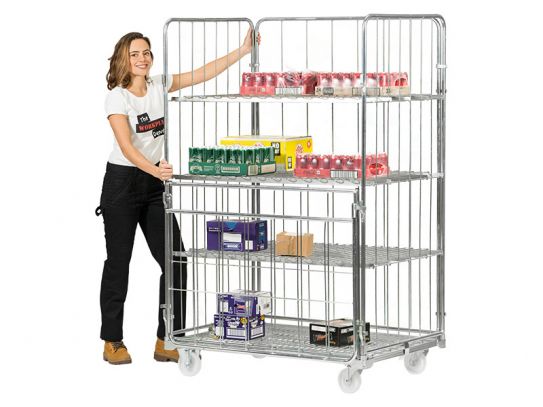
Looking for a roll container?
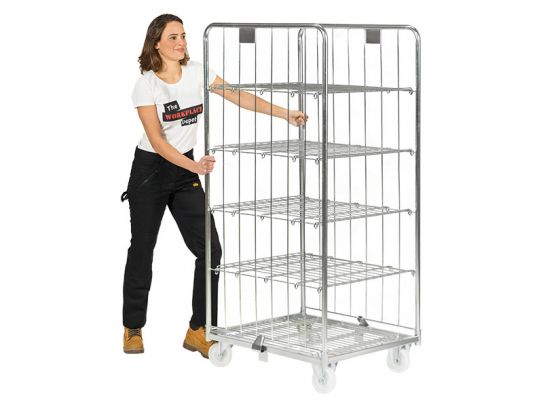
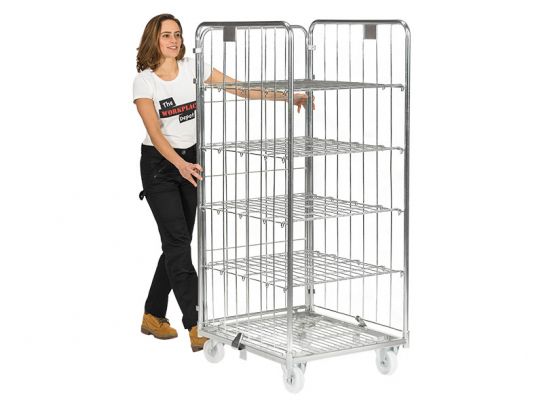
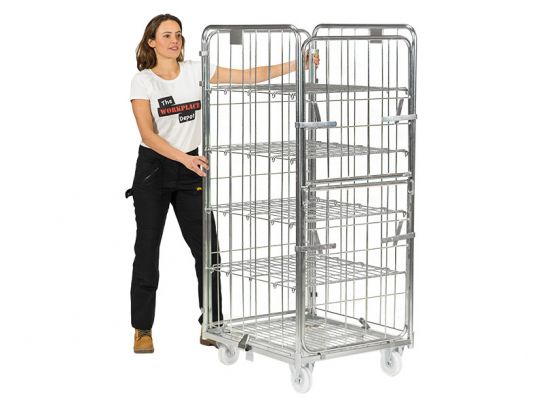
For warehouse cages and roll-container requirements, browse our Roll Container Trolleys. These are a separate product family from Catering Trolleys, so compare their product specifications and intended use rather than treating the two ranges as interchangeable.
Checks before ordering
Confirm the product name, SKU, material, level or bin layout, stated capacity, dimensions, castors, assembly requirements and included parts on the selected page. Compare available sizes and make the final choice for the intended kitchen or service environment. Recheck current price, availability and delivery information before placing the order.
Catering trolley FAQs
Which catering trolley should I compare first? Start with the featured Catering Trolley for a three-shelf plastic model. Choose the with-bins version when removable storage is useful, or compare stainless steel models when their shelf layouts better suit the load.
Are plastic and stainless steel catering trolleys used in the same way? They can serve overlapping transport tasks, but their construction, arrangement, capacity, dimensions and cleaning guidance differ. Compare the exact products rather than choosing on material alone.
How many shelves should a food service trolley have? Choose enough usable levels for the intended items without exceeding the exact product's stated load. Spacing and item stability can matter as much as the headline shelf count.
Can these trolleys carry uncovered food? Do not assume direct-food-contact suitability. Use appropriate containers and check the exact model's materials and any documented certification for the intended process.
Are roll containers part of the Catering Trolleys range? No. They are a separate product family for warehouse-cage and roll-container requirements. Compare them in the Roll Container Trolleys category.