

Dock Boards
Dock boards and dock plates
Dock boards and dock plates create a temporary surface between two loading points. Product names can overlap, so start with the vehicle, dock edge, goods and handling equipment involved, then compare those requirements with the selected product’s specification and instructions.
Suitability depends on the gap, height difference, available bearing area, usable width, stated load capacity and approved positioning method. Check these together rather than selecting from a maximum-load figure or product name alone.
Compare the dock board and plate range
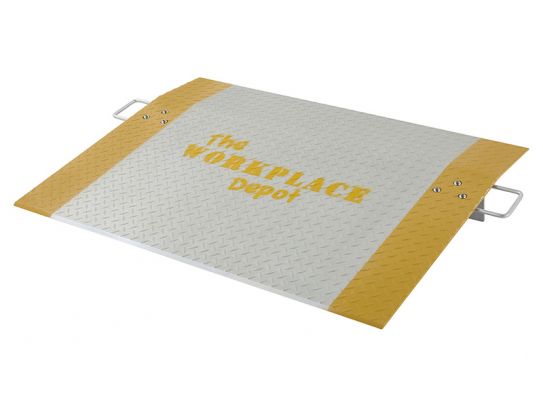
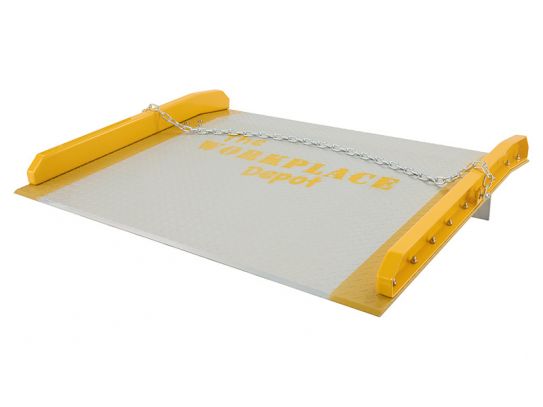
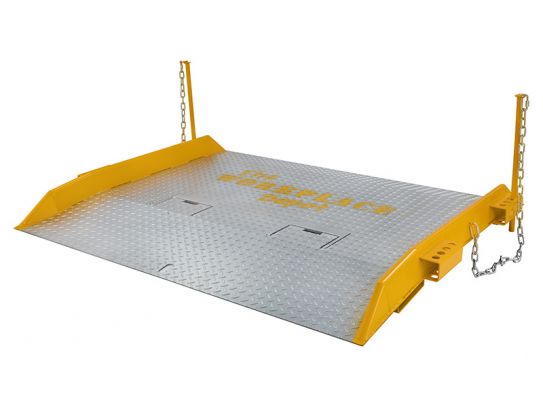
Start with the Loading Dock Plate, then review the Steel Dock Board with Handles and Aluminium Dock Board. Check each product page for its exact dimensions, stated capacity, product weight, handling information and current availability before ordering.
Check the selected product’s approved instructions for the required handling points and equipment. Do not infer that the steel board is intended for one-person manual handling from its name or photographs.
Compare aluminium dock plates and steel dock boards
The Loading Dock Plate and Aluminium Dock Board are aluminium; the Steel Dock Board with Handles is steel. Compare loading dock equipment by material, dimensions, stated capacity, weight and handling method; they are not interchangeable.
The Steel Dock Board with Handles is confirmed for forklift use and has flip-up steel loops for forklift engagement. Before loading or unloading with forklift trucks, check its stated limits and approved instructions, including laden weight, wheel loads, gap, height difference, dock, vehicle and operating conditions. Follow its positioning instructions; this compatibility is model-specific.
Measure the gap, heights and usable width
Measure the horizontal gap and the height at both loading points under the conditions in which the transfer will take place. Check the selected model’s approved instructions for the required bearing area, support at each end and any edge, lip, overlap, securing or restraint requirements. Use that model’s operating limits rather than applying a universal gradient or clearance rule.
Compare the product’s usable width with the widest part of the load and the handling equipment that will cross it. Allow for the full travel path and any edge features described in the approved product instructions; the external width and usable surface may differ.
Check load capacity, equipment and handling
Confirm the selected model’s stated load capacity and the conditions attached to it. Account for the goods and handling equipment, plus an operator where the approved instructions require it. Check wheel type, wheel dimensions, concentrated loads and operating method against the approved product documentation; a headline maximum does not establish compatibility.
Confirm that the model is approved for the hand trolley, pallet truck or other equipment involved. Check the product weight and authorised method for positioning, moving and storing it. Where mechanical handling is specified, ensure the required equipment and appropriately trained operators are available.
Check surface conditions and product guidance
Check the dock edge, vehicle deck and selected product at the frequency and in the manner required by the approved product instructions and site procedures. Evaluate contamination, damage and the supporting surface under those controls. A textured surface does not establish grip in every environment. Follow the approved instructions for cleaning, positioning and maintenance.
Dock boards and related ramp equipment
Dock boards and dock plates are not automatically equivalent to dock levellers, yard ramps or container ramps. Match the product to the transfer height, vehicle arrangement and access task.
For a different loading arrangement, review the separate Container Ramp or wider Ramps range. Use each product’s approved specification and instructions, together with the applicable site requirements, before choosing equipment.