

Warehouse
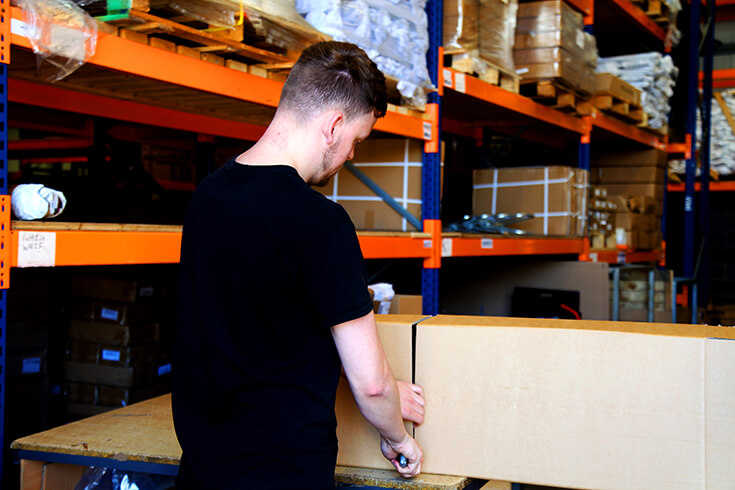
Anthony The Apprentice
Posted on April 23, 2018
Our most recent apprentice, Anthony, has impressed our warehouse team and been offered a full time position. Here's what he had to say about his time at The Workplace Depot so far. Anthony joined our team in April 2017 when he began his Warehouse and Logistics Apprenticeship. He recently began his full time role that he was offered shortly after completing the apprenticeship.
Read MoreManual Handling - 6 FAQs
Posted on August 14, 2013
Manual handling relates to the moving of items either by lifting, carrying, pushing or pulling. Pulling something may not be the case when it comes to the injuries, you can cause an injury by lifting, carrying or pushing an item. These injuries can be a result of, the amount of times you lift or carry an item, the distance you are carrying it, the height you are picking the item up from or putting it down i.e ground level and above shoulder height. Any awkward positioning whilst carrying out these tasks such as twisting, bending and stretching may cause injury also. Manual handling injuries are the most common kind of injuries covering over a third of all workplace injuries. These injuries include Musculoskelatal Disorder (MSDs) such as upper and lower limb pain/disorders, joint and repetitive strain injuries. These injuries can occur almost anywhere in the workplace. Heavy manual labour, awkward postures and previous or existing injury can increase the risk. Manual handling injuries that...
Read MoreWhy Choose Safety Steps?
Posted on April 08, 2013
Here at The Workplace Depot we have a range of mobile safety steps to suit any height and any type of access you need. Whether you work in an office, a warehouse or a supermarket storage facility, these steps will prevent any accidents and injuries to workers if they want to reach a high shelf. But why would you use safety steps rather than a ladder? One of the most common cause of injury when using a ladder is when the user carries out excessive overhead reaching which can lead to sprains and strains. Other injuries include, slipping off a ladder, the ladder wobbles and falls from under the user and the ladder breaking whilst in use. All of these can be prevented with a few safety checks listed in this table below, courtesy of HSE. Why not remove the risk of these injuries and use a safety step. Most safety steps have four legs with wheels on that can be secured so they do not move. The Foot Lock Safety Steps, have a mechanism which locks the front feet to immobilise the steps...
Read MoreSafety in the Warehouse
Posted on March 07, 2013
Safety in the Warehouse Thousands of serious injuries happen in warehouse environments each year according to the Health and Safety Executive (HSE). Most of these injuries occur through improper handling of goods and machinery, slips, trips and falls, and accidents involving other vehicles. Other injuries happen because of poorly maintained racking systems. Here are a few safety tips and checks that should be carried out when working in a warehouse or storage environment. Vehicles and Heavy-Duty Equipment Vehicles and heavy-duty equipment such as pallet trucks, forklifts, stackers and other warehouse trucks, account for the majority of injuries in a warehouse. Knowing what precautions you need to take is vital for keeping workers safe. But also, some accidents happen to the users of the equipment because they do not know which truck to use for which job and what the trucks capacity is. Using the wrong truck and capacity when dealing with goods, could end in a nasty accident, e.g. forklifts...
Read MoreGetting to Grips With Manual Handling
Posted on October 03, 2012
Over a third of injuries that keep people off work for more than three days at a time are caused by manual handling – falls and trips account for much of the rest. As a consequence there are many regulations governing activities such as pulling, pushing, carrying, lifting and loading. The following provides some suggestions on how to improve manual handling techniques and reduce accidents. The first thing to consider is whether the object needs handling at all – can the process be mechanised or made easier with handling aids such as sack trucks, pallet trucks, conveyors or other lifting devices. Has there been sufficient training for the person doing the moving, whether this involves the type of load, mechanical aids or other risk factors? Before doing any lift or handling of an awkward item it is advisable to have some kind of plan of action – this can include simple things such as removing obstacles out of the way or checking for potential trip hazards. For a particularly difficult item...
Read MoreSetting up a Distribution Warehouse for a Small Business
Posted on July 25, 2012
One of the problems for successful start-ups is where to store everything! If you're using drop-shippers you run the risk of poor service, failure to fulfil orders and having to respond to angry and disappointed customers. So if you want better control of your stock and already have an over-flowing garage or storeroom, then it's probably time to consider upping your game and setting up a your own warehouse. Here are a few things to consider when looking at a premises, although this is no substitute for seeking specialist advice. Layout and planning For a distribution warehouse to be able to efficiently fulfil orders in a timely manner, a proper layout and product flow diagram is required. You should measure and then make a scaled drawing so that you can get an accurate feel for where things need to go. Ensure you show the location of all doors, pedestrian exits, windows, sprinklers and electrical sockets. The receiving and shipping areas of the warehouse should be as far apart as possible...
Read More